
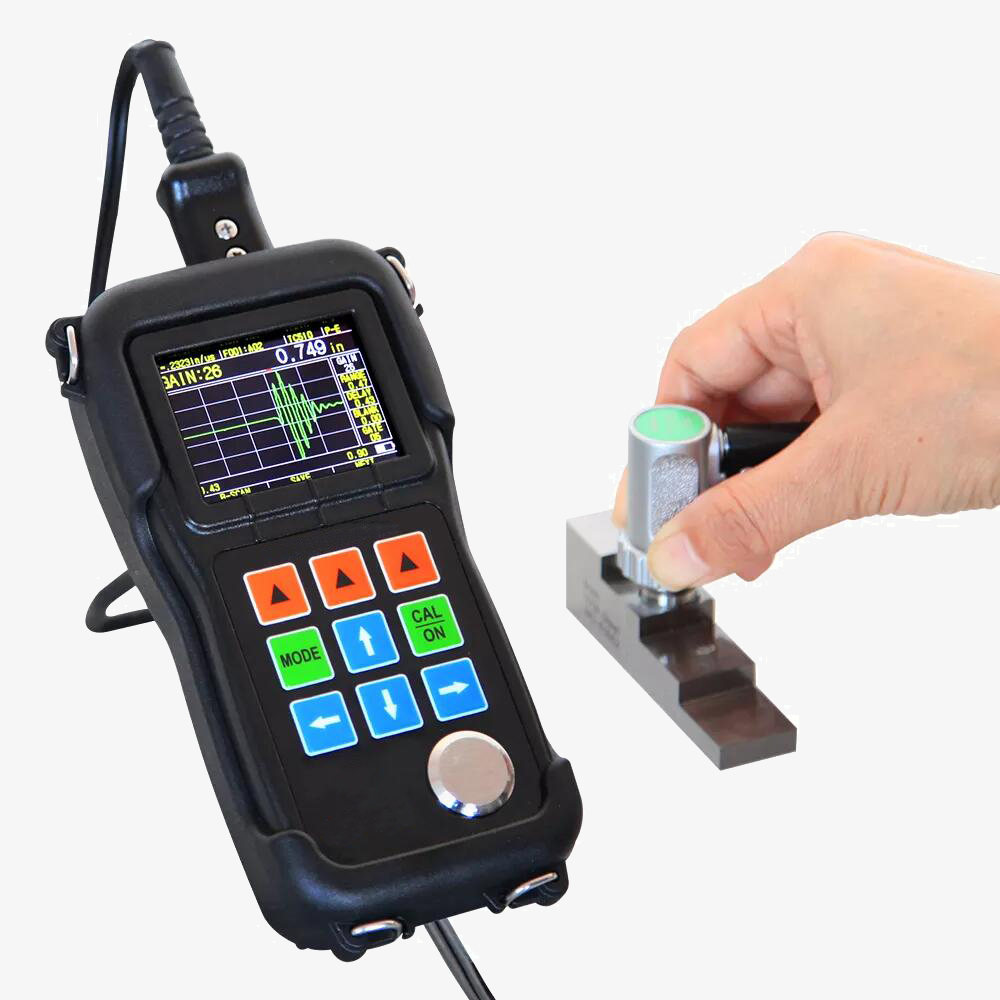
SISCO Ultrasonic Thickness Gauges Expand Non-Destructive Inspection Applications Across Industries sisco.com
As industrial manufacturers and infrastructure operators place increasing emphasis on material quality, equipment reliability, and preventive maintenance, non-destructive testing technologies are becoming increasingly important. SISCO ultrasonic thickness gauges offer a practical solution for measuring the thickness of compatible materials without cutting, drilling, or otherwise damaging the tested components. Their versatility makes them suitable for a wide range of inspection activities, from routine manufacturing quality control to industrial equipment assessment and engineering research.
In the manufacturing industry, ultrasonic thickness measurement plays an important role in verifying material dimensions and maintaining consistent production standards. Manufacturers can use suitable SISCO ultrasonic thickness gauges for metal/PVC/thru-coating to inspect metal sheets, pipes, machine housings, fabricated structures, and other industrial components. During incoming material inspection, measurements help quality control personnel determine whether supplied materials meet purchasing specifications and engineering drawings. The same technology can also be applied during production and final inspection to identify dimensional inconsistencies before products reach customers. By incorporating non-destructive thickness checks into established quality procedures, manufacturers can improve inspection efficiency while reducing the need to sacrifice valuable samples.
The energy sector represents another important application area. Boilers, heat exchangers, pipelines, pressure-related equipment, and storage facilities may experience gradual wall thinning as a result of corrosion, erosion, temperature changes, and long-term operating conditions. Periodic ultrasonic thickness measurements provide useful information about material condition and help maintenance teams identify areas that may require further investigation. Power plants, oil and gas facilities, and industrial processing operations can incorporate appropriate ultrasonic inspection procedures into their maintenance programs. Although thickness readings alone do not determine the overall structural integrity of equipment, they provide valuable data for engineering evaluations and maintenance planning.
Transportation and infrastructure industries also benefit from non-destructive measurement technology. Railway maintenance personnel may use compatible ultrasonic gauges to examine selected metal structures and components, while marine engineering teams can assess accessible sections of ship structures and associated equipment. In aerospace-related manufacturing and maintenance, suitable instruments can assist with verifying the dimensions of compatible material sections when used in accordance with approved inspection procedures. Construction companies can likewise apply ultrasonic thickness measurement to accessible metal structures, fabricated components, and industrial installations, helping reduce the need for destructive sampling during certain inspection tasks.
Beyond conventional industrial applications, ultrasonic thickness gauges are finding value in laboratories, research institutions, and product development departments. Engineers and researchers can use these instruments to compare prototype dimensions, evaluate material consistency, and study how different manufacturing processes influence product thickness. Packaging manufacturers may also use suitable models to measure compatible rigid plastic products and molded components. These applications demonstrate the importance of selecting an instrument with appropriate probe characteristics, measurement ranges, and material compatibility for each testing requirement.
As industries continue to prioritize reliable inspection and efficient asset management, SISCO ultrasonic thickness gauges provide a convenient option for non-destructive dimensional evaluation. Their application across manufacturing, energy, transportation, construction, and research environments highlights the value of accessible thickness measurement in modern industrial operations. By supporting material verification, routine condition monitoring, and engineering analysis, these instruments help organizations make informed decisions and maintain consistent quality standards throughout product manufacturing and equipment service life.
voters
Report Story 
Related Stories



Follow this discussion
More coverage
No reviewed related coverage has been linked to this story yet.
Popular Stories
-
SISCO Ultrasonic Thickness Gauges Expand Non-Destructive Inspection Applications Across Industries sisco.com
-
Welcome to the MAGA community on Twellit twellit.com
-

Trump's Presidency Is Far From Over | Victor Davis Hanson youtu.be
-

Stolen or Fumbled? What Really Happened in the 2026 Midterms youtu.be
-
No Way Out of Huge Global Debt – David Morgan rumble.com
Recent Stories
-
SISCO Ultrasonic Thickness Gauges Expand Non-Destructive Inspection Applications Across Industries sisco.com
-
Welcome to the MAGA community on Twellit twellit.com
-
Trump's Presidency Is Far From Over | Victor Davis Hanson youtu.be
-
Stolen or Fumbled? What Really Happened in the 2026 Midterms youtu.be
-
No Way Out of Huge Global Debt – David Morgan rumble.com
Share Your Take
What do you think about this story? Add your voice to the Twellit community.